SEPARATE
One slicer per job
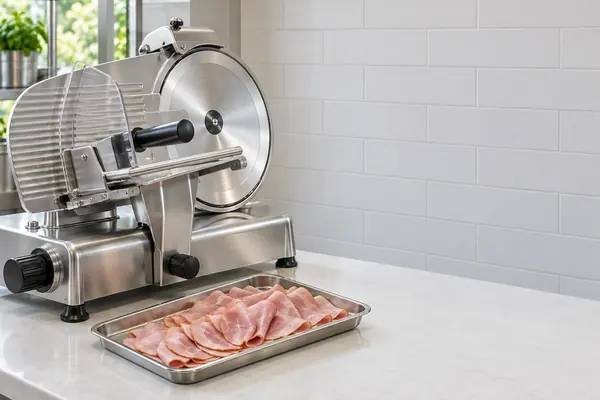
Complex equipment such as slicers, mincers and vacuum packers shouldn't be used for both raw and ready-to-eat food in a normal business day.
Check a slicer
 doodleslicer
WHAT THE GUIDANCE SAYS
RAW never meets ready-to-eat
Raw and ready-to-eat food should never share a slicer.
Food Standards Agency guidance on E. coli O157 calls slicers, mincers and vacuum packers complex equipment. They should not be used for both raw and ready-to-eat food in a normal business day.
Updated
Check a slicerTHE SHORT ANSWER
The guidance is for food businesses,
from factories to caterers and childminders.
SEPARATE
Complex equipment such as slicers, mincers and vacuum packers shouldn't be used for both raw and ready-to-eat food in a normal business day.
Check a slicerSWITCHING
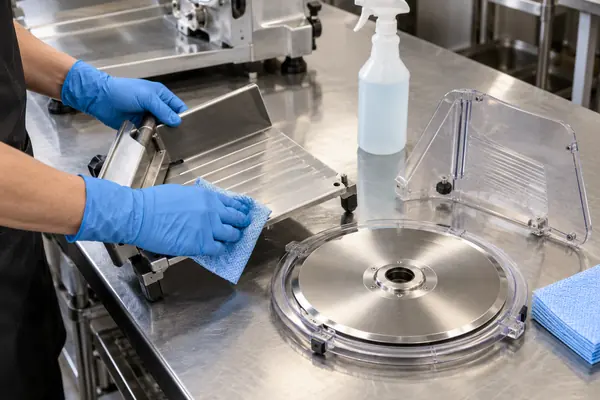
If a machine changes from raw to ready-to-eat use, it needs to be dismantled and every surface cleaned and effectively disinfected.
Two-stage cleaningHANDS
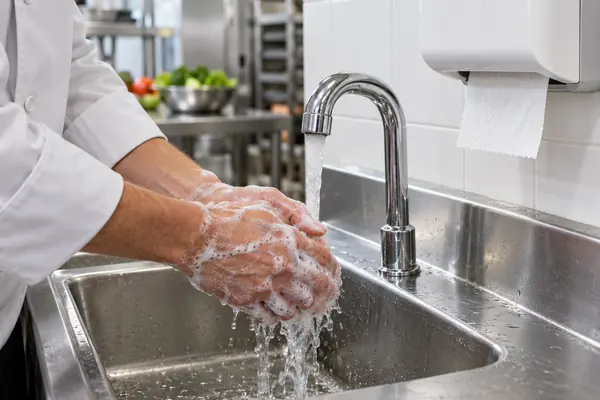
Gloves are not a substitute for handwashing. Change them as often as you would wash your hands, and wash when changing them.
Read onA QUICK SLICER CHECK
Pick a way a business might use its slicer to see what the guidance says. The bar shows the risk of spreading bacteria such as E. coli O157 to ready-to-eat food.
Based on Food Standards Agency E. coli O157 cross-contamination guidance and a council factsheet for caterers. General information, not legal advice.
TWO NUMBERS WORTH KNOWING
Heat is one of the best ways to kill bacteria,
if the temperature and time are right.
80 °C
Dishwasher water, for at least 15 seconds
If utensils go through a dishwasher, the water reservoirs should be kept above 80 °C for at least 15 seconds, and the machine cleaned regularly.
DISHWASHERS · COUNCIL FACTSHEET
82 °C
Hot wash for re-usable cloths
Re-usable cloths should be washed on a hot cycle at 82 °C or above and dried between tasks. Disposable single-use cloths are preferred where possible.
CLOTHS · COUNCIL FACTSHEET
Chopping boards and utensils must be kept separate for raw and ready-to-eat food unless they are cleaned and disinfected in a commercial dishwasher between uses.
TWO-STAGE CLEANING
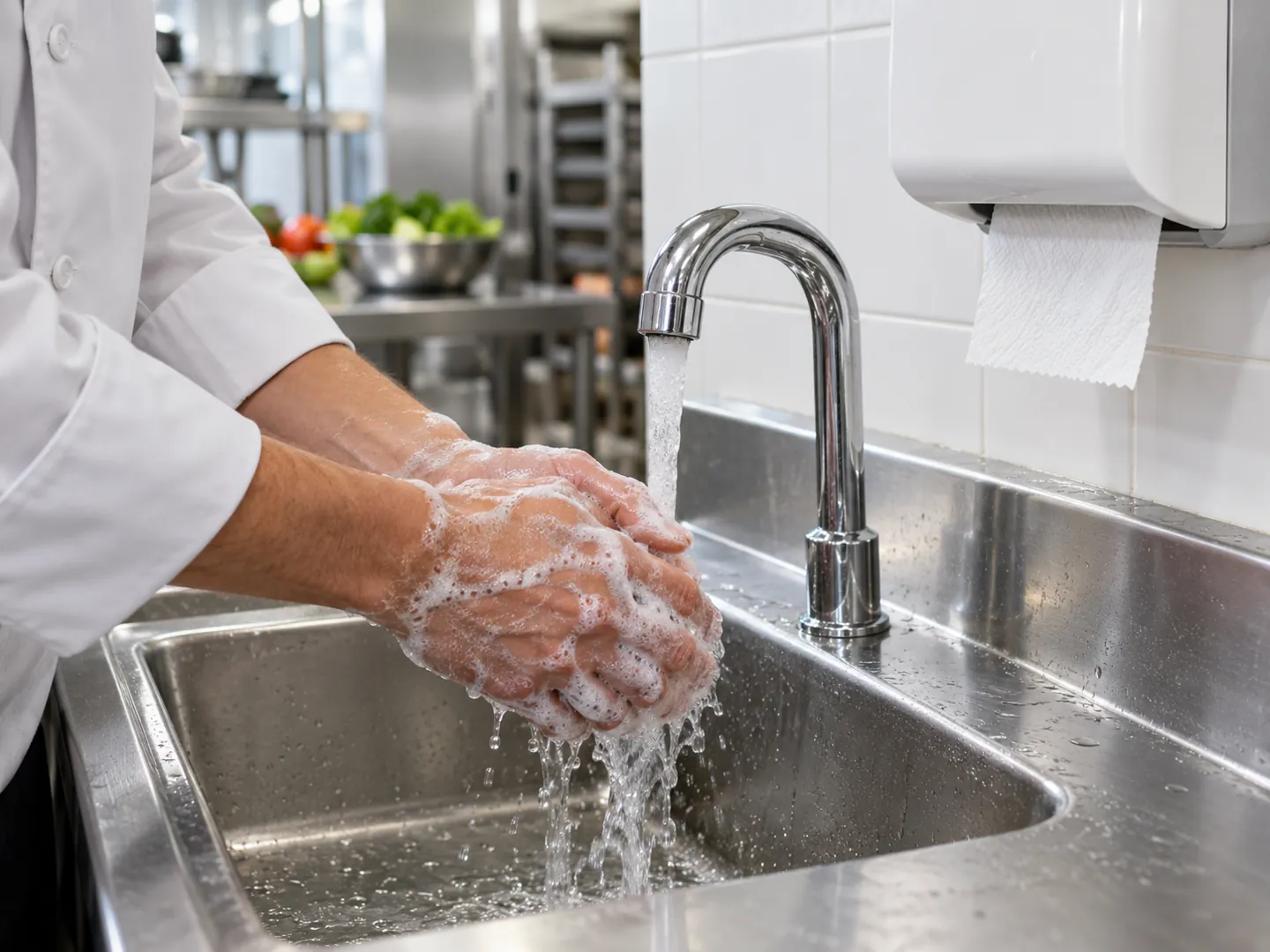
Chemical disinfectants only work on a surface that has already been cleaned of grease and dirt. This is the two-stage process the guidance describes.
Dismantle the slicer so every surface that touches food can be reached.
Use a cleaning product to remove visible dirt, food particles and debris, then rinse off any residue.
Apply disinfectant at the correct dilution and contact time from the instructions, then rinse with drinking water.
Disinfectants and sanitisers should meet BS EN 1276 or BS EN 13697. A sanitiser still needs the two stages.
THE BLADE
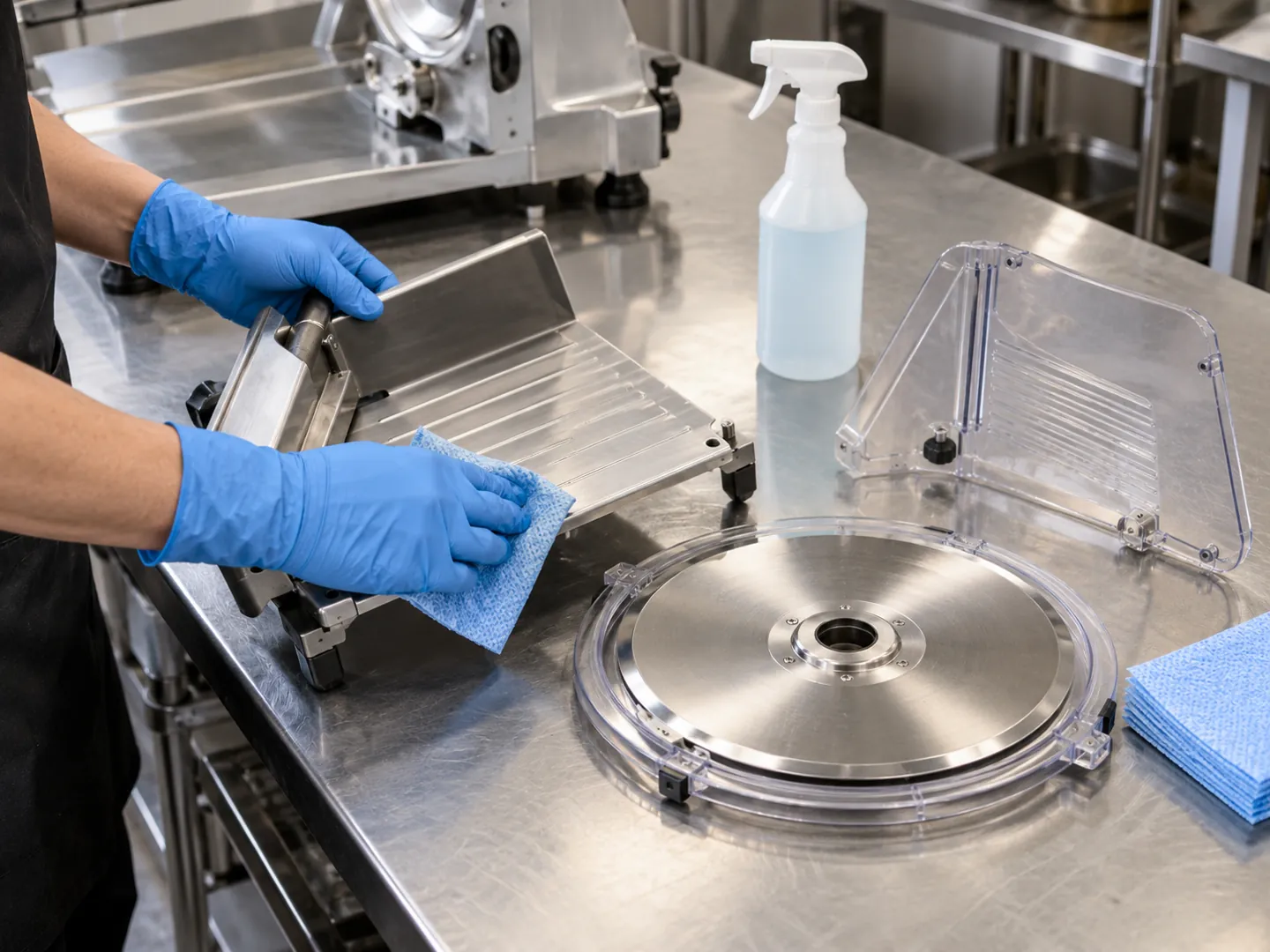
HSE says accidents with knives are common in catering and usually involve the non-knife hand and fingers. Its advice includes using the right tool for the food, cutting on a stable surface and handling blades carefully when washing up.
HSE also suggests employers decide whether to stop children from using machinery such as food slicers. Children may only do light work that is not likely to harm their safety, health or development.
Questions
FSA guidance groups slicers with mincers and vacuum packers as complex equipment. It says they shouldn't be used for both raw and ready-to-eat food during a normal business day.
To switch it from raw to ready-to-eat use, the guidance says it must be dismantled and every surface cleaned and effectively disinfected. Cleaning and disinfecting for shared use is the method the guidance says carries the most risk.
No. The guidance says gloves are not a substitute for effective handwashing. Change them as often as you would wash your hands, and wash your hands when you change or remove them.
No. Anti-bacterial hand gels must not replace handwashing, though they can be used afterwards as an extra layer of protection.
The council factsheet says raw meat, and fruit and vegetables that have been in contact with soil and are not supplied as ready-to-eat, should be handled as if contaminated with E. coli O157.
Sources
ABOUT THIS NAME
doodleslicer.com is part of the DoodleSale portfolio. It isn't in an auction right now, but you can ask about leasing it.